
Welcome to Pure Côte d’Azur
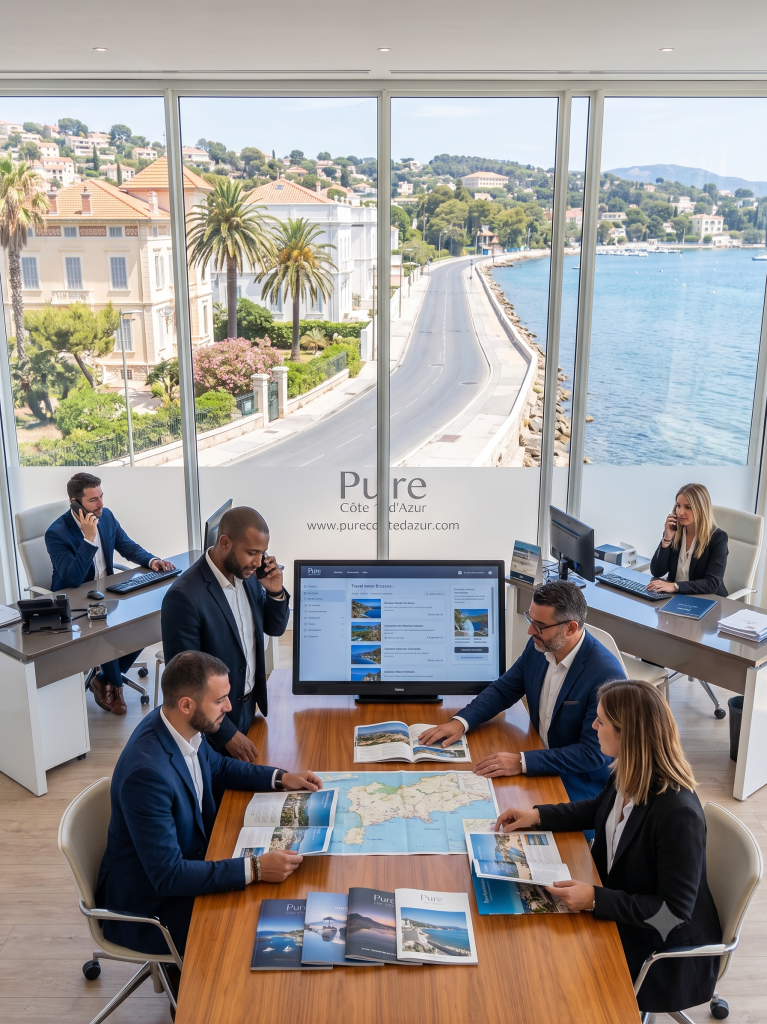
At the heart of the French Riviera, we specialize in curating highly exclusive, personalized, and seamless luxury lifestyle experiences. From securing magnificent private villas and chartering world-class yachts to arranging premium car experiences, our mission is to transform your vision of the perfect Riviera escape into an effortless reality.
Our Legacy of Excellence While our focus is the breathtaking beauty and glamour of the Côte d’Azur, our foundation is built on deep, global expertise. Since 2005, we have dedicated over 20 years to the professional travel and concierge industry. Over the past two decades, we have successfully delivered fully licensed, custom holiday experiences around the world to over 10,000 happy clients. This extensive heritage of designing bespoke itineraries ensures that every detail of your stay is handled with uncompromising professionalism, reliability, and absolute discretion.
The Pure Côte d’Azur Difference We understand that true luxury is defined by personalization and total peace of mind. Whether you require bespoke event planning, VIP access, or seamless day-to-day concierge management, our dedicated team operates with the singular goal of surpassing your expectations. We handle the intricate logistics of high-end travel so that you can simply arrive, unwind, and immerse yourself in the elegance of the Mediterranean.
Allow us to begin crafting your next extraordinary journey.
Contact Our Office: Phone: +33 744 878 974
Comprehensive Strategic and Operational Analysis of Sunshine World
Executive Overview and Market Positioning
The contemporary international travel and tourism sector is characterized by immense consolidation, wherein multinational conglomerates and digital aggregators often dominate market share through vast economies of scale and algorithmic efficiency. Within this highly competitive and rapidly evolving landscape, boutique independent operators must carve out distinct competitive advantages, typically through hyper-specialization, localized expertise, and highly personalized service delivery models. Sunshine World, established in the summer of 2005, represents a highly instructive case study of a specialized, vertically integrated travel enterprise that has successfully leveraged deep domain expertise to differentiate itself within the European and global travel markets.
Operating primarily out of the United Kingdom and Poland, but with a footprint that spans the globe, Sunshine World functions simultaneously as a hands-on tour operator, a comprehensive travel agency, and an educational institution. The company provides an extensive array of services, including winter sports packages, summer holiday excursions, corporate incentive trips, and professional ski and snowboard instructor training programs. The strategic positioning of Sunshine World is heavily anchored in its unique selling proposition: it is arguably one of the only international tour operators to be owned and operated entirely by professional, internationally qualified ski and snowboard instructors.
This fundamental organizational characteristic permeates every aspect of the company’s service delivery model, pricing strategy, and brand identity. By prioritizing bespoke, deeply personalized travel experiences over mass-market commoditization, Sunshine World has established a remarkably loyal customer base, evidenced by internal metrics indicating a return guest and referral rate exceeding 77%. This exhaustive research report critically examines the historical evolution, operational architecture, geographic diversification, pedagogical foundations, media reception, and corporate structuring of Sunshine World. Through a detailed analysis of the company’s foundational philosophies, product portfolios, and strategic footprint, this report generates multi-tiered insights into the viability, operational resilience, and future trajectory of instructor-led tourism enterprises in the modern macroeconomic environment.
Genesis, Entrepreneurial Architecture, and Founder Psychology
The genesis of any closely held, owner-operated enterprise is invariably tied to the psychological, personal, and professional evolution of its founder. Sunshine World was officially founded on August 3, 2005, by Alan James Garcia, an entrepreneur whose unique personal background and early life experiences profoundly shaped the company’s corporate ethos and operational priorities. Born in Paris, France, and raised from the age of three weeks in and around South West London, Garcia’s early life was marked by a synthesis of European cultural influences and an enduring affinity for outdoor athletic pursuits. His early education took place at the Roche Primary School, St. Osmond’s, and later at Kingston Grammar School.
The Catalyst for Enterprise and Early Professionalization
The developmental trajectory of Sunshine World is rooted in a profound personal tragedy that served as a powerful, albeit difficult, catalyst for its founder. At the age of 15, following the unexpected death of his stepfather in a helicopter accident—an event that threw his family into emotional confusion and heartbreak—Garcia undertook a transformative solo journey to the alpine environment of Whistler, British Columbia, Canada, for a period of three months. The stated objective of this physical and psychological relocation was to gain mental clarity away from his immediate environment and to pursue an intense, highly focused period of professional snowboard training.
It was during this critical formative window that Garcia achieved a significant milestone, becoming the youngest individual at that time to attain the Canadian Association of Snowboard Instructors (CASI) Level 1 certification in British Columbia. This early immersion into the rigorous standards of professional alpine instruction established the bedrock of what would eventually become the operational methodology of Sunshine World. Over the subsequent years, Garcia aggressively pursued a comprehensive portfolio of elite sports instruction certifications across multiple global resorts, including Courchevel in the French Alps, further solidifying his technical expertise.
To finance this rigorous 18-month training period and to provide vital financial support for his mother and younger siblings, Christophe and Lucie, Garcia engaged in diverse employment across the hospitality and recreational sectors. His roles ranged from service positions at TGI Friday’s to instructional positions at the Sandown dry ski slope, a Club Med resort in Tunisia, and Simon Butler Skiing, a highly regarded ski company operating in the French Alps. This multifaceted early career provided Garcia with unparalleled exposure to varying standards of customer service, high-volume hospitality management, and the logistical complexities of international tour operations.
Bootstrapping and Lean Startup Methodology
By the age of 20, drawing upon savings of exactly £2,000 accumulated through his various instructional and hospitality roles, Garcia established Sunshine World. The inception of the company was governed by two rigid, fail-safe principles that are emblematic of a highly disciplined, risk-averse lean startup methodology. First, the company operated on a strict financial mandate never to spend more capital than was currently held in the bank, thereby mathematically eliminating the risk of insolvency through leveraged debt. Second, the organization embraced a purely experiential learning model—learning by doing—under the premise that as long as financial exposure was strictly mitigated by the first principle, operational missteps and logistical errors could be absorbed simply as developmental lessons rather than fatal corporate failures.
From a strategic perspective, this bootstrapped approach insulated Sunshine World from the aggressive financial leveraging that often precipitates the collapse of early-stage travel operators during macroeconomic downturns or seasonal disruptions. Furthermore, Garcia’s entrepreneurial acumen was not purely instinctual. Encouraged by his entrepreneurial parents from the age of ten, he attended numerous business management courses throughout his youth, seamlessly marrying his passion for alpine sports with formalized commercial frameworks and management strategies.
Corporate Ethos and Cultural Architecture
The emotional underpinnings of Garcia’s early life directly translated into Sunshine World’s overarching corporate mission: to serve as a specialized tool that facilitates the creation of some of the most wonderful, memorable moments in people’s lives. Operating under the trademark slogan, “Sunshine World… never stop dreaming!”, the organizational culture explicitly prioritizes empathy, care, and a highly personalized approach to customer service.
This ethos extends deeply into the internal dynamics of the Sunshine World Pro Team. The company positions itself not merely as a corporate entity, but as a tight-knit family that balances rigorous professional on-mountain standards with an energetic, highly social off-mountain atmosphere. Marketing narratives explicitly highlight this dual nature, noting that while the team is dedicated to instruction, they also “definitely know how to party,” aiming to attract a specific demographic that values both technical excellence on the slopes and vibrant, authentic après-ski experiences. Team members such as TJ Alty—a Canadian snowboard and ski instructor from Winnipeg, Manitoba, whose prior experience includes working in the remote resorts of Lesotho in Southern Africa—perfectly embody this dual focus. Operating under personal mottos such as “go big or go home” and “everybody wang chung tonight,” the staff cultivates an environment of high-energy enthusiasm that resonates strongly with the brand’s target audience.
Technical Qualifications and Pedagogical Foundations
To fully comprehend the market positioning of Sunshine World, it is essential to analyze the profound depth of technical expertise embedded within its leadership structure. Unlike traditional travel agencies run by administrators or marketing executives, Sunshine World is governed by individuals whose primary professional identities are rooted in sports pedagogy. The aggregation of these technical qualifications is critical to understanding the authoritative positioning the company holds in the winter sports market.
The table below delineates the extensive professional credentials held by the founder, Alan Garcia, which subsequently informed the company’s curriculum design, risk management protocols, and service delivery methodologies.
| Certification / Qualification | Governing Body / Institution | Sector / Discipline |
| CASI Level 1 & CASI Level 2 | Canadian Association of Snowboard Instructors | Snowboarding |
| CASI Level 3 Training | Canadian Association of Snowboard Instructors | Snowboarding |
| CSIA Level 1 | Canadian Ski Instructors’ Alliance | Alpine Skiing |
| BASI Level 3 | British Association of Snowsport Instructors | Alpine Skiing |
| ISIA Course Training | International Ski Instructors Association | Advanced Winter Sports |
| Coach A & Coach B Licenses | Stonebridge Academy of Lawn Tennis | Tennis Instruction |
| LTA Tennis Assistant Course (Exemption) | Lawn Tennis Association (Granted 2005) | Tennis Instruction |
| First Aid Certification | St. John’s Ambulance & BASP | Medical / Mountain Safety |
Data compiled from foundational corporate biographies and historical records.
The inclusion of high-level tennis coaching licenses alongside alpine certifications indicates a broader pedagogical understanding of biomechanics, client communication, and structured athletic progression. This multi-disciplinary coaching background allows the leadership team to approach ski instruction not merely as a recreational activity, but as a structured athletic endeavor, elevating the quality of the service provided to the end consumer.
The Professional Ski and Snowboard Instructor Training Academy
Perhaps the most structurally insightful and economically significant element of Sunshine World’s business model is its proprietary Professional Ski and Snowboard Instructor Training Academy. Billed historically as the cheapest ATOL-protected training academy of its kind in Europe, and potentially the world, this initiative serves multiple strategic corporate functions that extend far beyond simple revenue generation.
Firstly, the academy acts as a highly effective, self-sustaining talent pipeline. By actively training over 70 young athletes to attain internationally recognized official qualifications, Sunshine World effectively recruits, molds, and evaluates potential future staff members under the umbrella of a paid service. This allows the company to maintain strict quality control over its instructional staff, ensuring that all instructors align with the company’s specific pedagogical philosophies and cultural ethos.
Secondly, the academy reinforces the brand’s overarching authority within the industry. By transitioning from merely offering leisure holidays to minting licensed professionals, Sunshine World elevates its prestige within the broader winter sports ecosystem. Garcia’s subsequent establishment of the European Association of Professional Snowsport Instructors (EAPSI) further consolidates this authority, representing an ambitious attempt to set industry standards, foster cross-border professional collaboration, and create a centralized network of affiliated alpine professionals.
Retail and Lifestyle Integration: 3Ryde
The company’s portfolio is further augmented by the creation of 3Ryde, a proprietary clothing and equipment brand founded directly by Alan Garcia. 3Ryde serves as the official sponsor and outfitter of the Sunshine World Pro Team. The strategic integration of a retail apparel brand signifies a deliberate effort to transition Sunshine World from a purely service-oriented travel business into a holistic, omnipresent lifestyle brand. By outfitting instructors in proprietary gear and creating marketable merchandise, the company generates passive, continuous brand visibility on the slopes. Furthermore, it establishes an auxiliary revenue stream that is not strictly bound by the seasonal constraints and geographical limitations of physical travel bookings.
The Strategic Epicenter: Market Penetration in Zakopane
While Sunshine World eventually diversified its operations globally, its initial and most defining strategic maneuver was the identification, analysis, and colonization of Zakopane, Poland, as its primary operational hub. In 2005, the European winter sports market was heavily concentrated in the traditional, high-cost Alpine regions of France, Switzerland, Italy, and Austria. Garcia’s primary entrepreneurial objective was to discover an alternative destination accessible via short-haul flights from the United Kingdom and Ireland that could deliver a comprehensive, high-quality winter sports experience without the prohibitive, exclusionary price tags traditionally associated with legacy Alpine resorts.
Macroeconomic Timing and Strategic First-Mover Advantage
The selection of Poland as the corporate beachhead was a masterstroke of macroeconomic timing. Following Poland’s formal accession to the European Union in 2004, the country experienced a rapid, unprecedented influx of low-cost airline routes, effectively bridging the historical logistical gap between the UK and Eastern Europe. Despite contemporary travel reports and media narratives that poorly presented Zakopane and the Tatra Mountains at the time, Garcia conducted an intensive 10-day physical reconnaissance of Kraków and Zakopane. During this site visit, he discovered a stark contrast to the media narrative: high-quality alpine facilities, excellent terrain, and a vibrant local culture, all juxtaposed against highly favorable currency exchange rates.
Recognizing the potential for a massive arbitrage opportunity in the ski tourism sector, Garcia bypassed traditional intermediaries and directly approached the Zakopane town hall. By presenting his vision and securing the enthusiastic support of Zofia Karpinska, the Director of Sports and Tourism for the municipality, Sunshine World forged formal, localized agreements with service providers, hoteliers, and transport operators. This diplomatic and commercial initiative established Sunshine World as the very first licensed international tour operator from the UK to deliver professional ski and snowboarding holidays in Zakopane, securing a vital first-mover advantage.
The Polish Operational Architecture and Institutional Endorsement
During its inaugural season, the company operated with a highly conservative, risk-adjusted target of hosting merely 12 guests per week. However, the compelling value proposition rapidly accelerated organic growth. By leveraging local partnerships, Sunshine World assembled highly attractive, all-inclusive packages that significantly undercut Western European competitors while simultaneously maintaining high profit margins due to the lower cost of local goods, labor, and services in Poland at the time.
This early first-mover advantage was subsequently solidified and formalized when Sunshine World Poland was officially endorsed by the Polish National Tourist Office for Skiing Holidays in Poland. Such high-level institutional backing provided a critical layer of credibility and consumer trust, reassuring a British public that may have harbored lingering Cold War-era reservations about utilizing Eastern European ski resorts in the mid-2000s. Driven by this momentum, the company eventually processed over 4,000 guests in the region, facilitated localized visits for over 15 international journalists, and firmly entrenched itself as the leading British tour operator specializing in Polish winter holidays, ultimately generating a turnover exceeding £650,000 with a remarkable 25% to 30% year-on-year growth rate.
Product Portfolio, Pricing Elasticity, and Economic Mechanics
The core of Sunshine World’s revenue generation stems from its meticulously structured winter holiday packages. By critically analyzing the pricing models historically advertised by the company, one can observe a strategic, tiered approach designed to capture varying segments of the consumer market, from budget-conscious university students to affluent demographics seeking luxury VIP experiences. The ability to bundle flights, local transfers, varied accommodation, equipment rental, lift passes, and professional instruction into a single, transparent price point eliminates the severe cognitive load and financial anxiety typically associated with booking multi-faceted ski holidays.
The following table illustrates the historical tiered pricing structure for a typical 7-night stay in Zakopane, demonstrating the operational depth and vertical integration of their all-inclusive model:
| Package Tier Classification | Accommodation Specification | Core Package Inclusions | Advertised Price (From) |
| Luxury / VIP Tier | 4-Star Belvedere Resort & Spa | 7 nights accommodation, full spa access, 6 days equipment rental, 5 days professional instruction, 5 days lift passes, daily slope transport, return UK flights, airport transfers, exclusive VIP treatment. | £965 per person |
| Mid-Market Premium | 4-Star Hotel Litwor Resort | 7 nights accommodation, spa/Jacuzzi access, 6 days equipment rental, 5 days instruction, 5 days lift passes, slope transport, return UK flights, transfers. | £645 per person |
| Standard Package | 3-Star Local Hotel | 7 nights accommodation (B&B), pool/sauna access, 6 days equipment rental, 5 days instruction, 5 days lift passes, slope transport, return UK flights, transfers. | £525 per person |
| Group / Value Tier | Traditional Catered Chalet | 7 nights accommodation (Half Board), 6 days equipment rental, 5 days instruction, 5 days lift passes, slope transport, return UK flights, transfers. | £495 per person |
| Short Break / Weekend | 3-Star Local Hotel | 2 nights accommodation (B&B), pool/sauna access, 2 days equipment rental, 2 days instruction, 2 days lift passes, slope transport, return London flights. | £290 per person |
Note: Pricing represents historical advertised rates utilized for market positioning analysis. Flights were frequently sourced via aggregators like Skyscanner or bundled directly.
Competitive Benchmarking and Margin Optimization
Analysis of the above data indicates a highly elastic product offering designed for maximum market penetration. By offering a fully catered chalet option for under £500 (inclusive of both international flights and professional instruction), Sunshine World effectively democratized the winter sports market, opening it to demographics historically priced out of Alpine resorts.
To contextualize this pricing strategy, a 2009 independent archive comparing Polish ski holidays evaluated Sunshine World against competitors such as White Side Holidays and Polonium Travel. While Polonium Travel offered a fragmented package for £435 (excluding full packages and clear pricing) and White Side Holidays offered a package for approximately £575 (with flights), Sunshine World presented a fully comprehensive package for £620 that included critical, high-margin extras such as swimming pool access, equipment rental, structured skiing instruction, and lift passes. The archive noted that Sunshine World was uniquely positioned as the only agency capable of offering a truly complete, vertically integrated package.
Furthermore, because the company’s executives and core staff are fully qualified instructors themselves, the actual operational cost of delivering the instructional component of these packages is structurally optimized. By keeping instructional labor in-house rather than outsourcing to third-party local ski schools at retail rates, Sunshine World generates significantly higher margins than traditional travel agents, retaining capital that can be reinvested into customer acquisition or service enhancements.
Geographic Diversification and Seasonal Risk Mitigation
While Zakopane remains the foundational pillar and historical epicenter of the enterprise, the leadership at Sunshine World recognized the inherent vulnerabilities of operating as a single-destination, highly seasonal tour operator. Warm winters, unpredictable snowfall, regional economic fluctuations, or sudden geopolitical instability can economically devastate geographically isolated operators. Consequently, the company embarked on an aggressive campaign of horizontal expansion, eventually scaling to manage over 50 specific websites and offering highly specialized itineraries across dozens of international destinations.
The Winter Sports Diaspora
Sunshine World strategically leveraged its successful operational blueprint from Poland and applied it to diverse global terrains. The company developed bespoke websites and specialized packages targeting premium, established European markets, such as France (focusing extensively on the French Alps and the Cote D’Azur) and Austria. To cater to the growing adventure and exotic travel demographics seeking novel experiences, they expanded operations into Scandinavia, offering packages in Norway highlighting the Trysil Resort (Norway’s largest ski resort) and the interconnected Lillehammer Valley.
Further eastern expansion targeted the emerging Balkan ski markets, specifically the Borovets and Bansko ski resorts in Bulgaria, the latter heavily promoted for its vibrant local food and nightlife. Pushing beyond traditional boundaries, Sunshine World introduced winter tours to Armenia (featuring a 15-day route through Yerevan and Echmiadzin) and facilitated Southern Hemisphere expeditions to Chile and New Zealand, effectively allowing the company to operate ski tours year-round.
This expansion reflects a nuanced, long-term understanding of consumer life cycles and retention. A budget-conscious university student might initially book a £495 catered chalet in Zakopane; however, as their disposable income and appetite for luxury increase over a decade, Sunshine World retains that customer within its ecosystem by migrating them to a premium luxury package in the French Alps or an exotic, high-ticket expedition to the Andes in Chile.
Mitigating Seasonality: The Summer and Cultural Portfolios
To counteract the highly seasonal, cyclical cash flow inherent in the winter sports industry, Sunshine World aggressively built out a comprehensive summer holiday portfolio. This strategic transition marked a profound evolution from a specialized alpine sports provider to a generalized adventure, cultural, and heritage travel agency. The summer catalog reveals a highly strategic segmentation of target audiences:
1. The Party and Event Demographic
Capitalizing on the low-cost airline boom in Eastern Europe, Sunshine World introduced highly structured Stag, Hen, and Party weekends focused on major urban centers like Kraków and Warsaw, alongside expansions into Lithuania. These packages heavily feature high-octane activities tailored for young adults, such as VIP clubbing, quad biking, paintballing, off-road 4×4 driving, hang-gliding, and casino entry. By acting as a dedicated chaperone, logistics coordinator, and financial intermediary (collecting funds from individual group members) for these high-energy groups, Sunshine World captures a highly lucrative, short-duration travel segment that demands seamless execution.
2. The Cultural, Historical, and Religious Demographic
In a stark operational pivot from extreme sports and party weekends, Sunshine World developed extensive, deeply historical itineraries in the Middle East. These tours require immense logistical precision and local knowledge. Offerings include the 11-day “Heritage and Jordan Tour,” the 8-day “Israel Bibleland Tour” (commencing in Jerusalem), and the 8-day “Heritage Of The Holy Land Tour” (commencing in Tel Aviv).
Further demonstrating a commitment to comprehensive regional coverage, they introduced specific Palestinian itineraries, including a 7-day “Walk The Holy Land Tour” covering Jaffa, Nazareth, and the Sea of Galilee, alongside specialized 5-day Islamic and Heritage tours exploring sites such as the Ahmed El-Jazzar Mosque in Akko, the Baha’i Shrine in Haifa, the Stella Maris Carmelite Monastery, and Elijah’s Cave. Offering structured religious and historical tourism in highly complex geopolitical regions demonstrates a high degree of operational sophistication and allows the company to tap into the economically resilient, older-demographic religious tourism market.
3. The Adventure and Eco-Tourism Demographic
The company curated specialized tours in emerging, frontier markets such as Georgia, offering extensive 17-day comprehensive tours traversing Georgia, Azerbaijan, and Armenia. Shorter Georgian itineraries include 6-day explorations of ancient Tbilisi and the 4th-century Fortress Narikhala, as well as 3-day Jeep expeditions through the wild Kazbegi mountains and the wine-producing Kakheti region. Furthermore, within their foundational Polish market, they diversified into agro-tourism, horse riding, ecology hiking, mountain biking, and dedicated spa retreats, ensuring revenue generation irrespective of snowfall.
By successfully implementing this complex matrix of destinations and tour types, Sunshine World engineered a resilient, year-round revenue model, fundamentally de-risking the enterprise from the anomalous weather patterns and climate shifts that routinely threaten the broader ski industry.
Media Reception, Brand Positioning, and Public Relations
The sustained, organic growth of Sunshine World was heavily catalyzed by highly effective public relations and media outreach strategies. For a boutique, independent agency to compete with massive, heavily capitalized tour operators, securing validating, third-party coverage in tier-one national press is paramount. Sunshine World successfully penetrated the mainstream British media landscape, securing dedicated features and mentions in prestigious publications such as The Telegraph, The Independent, The Mirror, and The Express.
Analysis of Tier-One Press Coverage
The media narrative surrounding Sunshine World consistently highlights the bespoke, highly enthusiastic, and deeply personal nature of its service delivery. Two specific, documented journalistic interactions heavily underscore this dynamic:
The Independent (November 2008): Travel journalist Ross Young documented a press trip to Zakopane orchestrated by Sunshine World. The published article, “Skiing – Poland reveals its winter wonders,” captured a highly personalized and somewhat whimsical approach to customer service. Upon arriving and asking about the immediate itinerary, Young was informed by Alan Garcia, “Now we take a romantic sleigh ride together”. Young noted in the piece that the horse-drawn, Dobbin-powered sleigh was an “optional throwback targeted squarely at tourists”. While acknowledging the logistical reality that Zakopane’s sprawling layout—characterized by street after street of wooden chalets—required public transport or taxis to navigate efficiently, the coverage painted the destination and the operator as charming, deeply authentic, and highly attentive to the guest experience.
The Telegraph (December 2009): Veteran travel writer and editor Adrian Bridge, possessing 20 years of experience on the Telegraph Travel desk, provided an even more critical, authoritative endorsement of the company’s core competency: athletic instruction. In his review, Bridge praised Garcia’s pedagogical skills and infectious energy, noting explicitly:
“we first skied with Alan, a man who exudes an almost childlike enthusiasm for winter sports. Experienced we may have been, but he quickly taught us a few new tricks, some great warm-up exercises, and explained better than anyone before how best to ski on carvers”.
This specific piece of coverage represents a massive, enduring triumph in brand positioning. It objectively validates the foundational premise of Sunshine World—that a company owned and run by passionate, highly qualified instructors delivers a fundamentally superior on-mountain experience compared to standard, administratively focused travel agents. Bridge’s description of Garcia’s “childlike enthusiasm” perfectly aligns with the company’s “never stop dreaming” corporate slogan, establishing an authentic, verifiable synergy between the brand’s marketing materials and the actual consumer experience delivered on the ground.
The Seasonaire Movie and Avant-Garde Content Marketing
In a prescient marketing move that predated the ubiquity of modern influencer-driven social media and YouTube vlogging, Sunshine World embraced long-form, high-production content creation. In December 2011, the company premiered the “Sunshine World Seasonaire Movie (Official Full Length Version)”, audaciously marketing it to their audience as “The greatest Ski and Snowboard Movie of all time!”.
By distributing this lifestyle content entirely for free and encouraging viewers to organically “LIKE and SHARE,” the company leveraged early digital word-of-mouth mechanisms. This strategy effectively documented the authentic, high-adrenaline lifestyle of the Sunshine World Pro Team. By showcasing their skills, social events, and daily lives, Sunshine World transformed its staff into aspirational figures, creating a deep, parasocial connection with the target demographic that traditional, static brochure marketing could never achieve.
Reputation Management and Digital Vulnerabilities
Objective analysis of historical consumer feedback indicates that the positive media narrative closely mirrors the actual customer experience delivered by the firm. Sunshine World has historically enjoyed robust, highly positive reviews across various independent travel portals and directories.
Third-Party Endorsements and Client Testimonials
On the prominent regional directory Local Life Zakopane, Sunshine World achieved the prestigious #1 ranking in the “Travel & Transport in Zakopane” category. The platform’s resident editor provided a glowing appraisal of the firm, stating that for travelers seeking to avoid the logistical stress of organizing a trip, Sunshine World is the premier choice. The editor specifically highlighted the endorsement by the Polish National Tourist Office as a guarantee against dealing with unreliable “cowboys,” and praised the London-based team’s ability to seamlessly organize flights, negotiate nightclub entries, and provide elite ski instruction before the client could even “say Lech Walesa”.
Individual, verified customer reviews corroborate this editorial assessment. A November 2010 review from a UK client, Stuart Pane, articulated a common realization among Sunshine World customers: despite attempting to organize a holiday independently to save capital, utilizing Sunshine World’s bundled, wholesale packages ultimately proved significantly more cost-effective and efficient. Another review from a Norwegian client, Olaf, in 2013 praised the company for providing a “good deal for tourist” and excellent service. Internal company testimonials further reflect this sentiment, with clients routinely praising the dedication of the staff (mentioning specific team members like Rob, Billy, Tomasz, Dan, and James from the Academy), the quality of the partner hotels, and the overall value proposition, including niche activities like ski-dooing and go-karting.
Corporate Architecture and Jurisdictional Evolution
An examination of the corporate legal structures utilized by Sunshine World reveals an evolutionary timeline that is highly common to successful international entrepreneurs navigating complex cross-border operations, liability management, and tax optimizations.
Data extracted from the United Kingdom’s Companies House registry indicates that founder Alan James Garcia directed several corporate entities intertwined with the Sunshine World brand, all of which are now legally dissolved within the UK jurisdiction.
| Corporate Entity Name | UK Registration Number | Jurisdiction | Current Status |
| SUNSHINE WORLD ENTERPRISES LIMITED | 05554417 | United Kingdom | Dissolved |
| 3RYDE LIMITED | 07282471 | United Kingdom | Dissolved |
| SUNSHINE WORLD HOLIDAYS LTD | 08365442 | United Kingdom | Dissolved |
Data sourced from official Companies House statutory filings.
The statutory filings show a registered correspondence address located directly in the Polish resort town: 18b/1 Za Strugiem, Zakopane, 34-500, Poland, alongside previous executive addresses in Knightsbridge, London, and Middlesex.
Crucially, the dissolution of these UK-based limited liability companies does not indicate the cessation of commercial operations or financial distress. Rather, in the company’s most recent booking conditions, privacy policies, and terms of service, the primary operating entity is explicitly referred to under different corporate nomenclatures, specifically Sunshine World LLC and Sunshine World Int..
This transition strongly suggests a deliberate, strategic corporate restructuring. Given that the primary logistical operations, real estate partnerships, and instructional activities occur on the ground in international territories such as Poland, France, and the Middle East, maintaining a primary holding company in a different, more flexible jurisdiction (such as an LLC structure) likely offers superior logistical agility, enhanced liability protection across borders, or improved tax efficiency. The migration from restrictive UK LTD structures to a broader LLC or decentralized, locally registered enterprise reflects the profound maturation of the business. It has evolved from a simple British startup exporting tourists to an agile, location-independent travel network capable of operating globally without unnecessary bureaucratic friction.
Strategic Conclusions and Future Industry Outlook
The operational narrative of Sunshine World provides profound insights into the mechanics of niche tourism and demonstrates the enduring, resilient viability of specialized owner-operator models in the face of massive algorithmic travel booking engines (e.g., Expedia, Booking.com).
The Triumph of the Specialist over the Generalist
The central thesis underpinning Sunshine World’s sustained success is the effective commoditization of authentic expertise. While digital aggregators can provide consumers with the mathematically cheapest flights and hotel beds through API integrations, they cannot synthesize the localized, experiential knowledge required to execute a seamless, emotionally resonant ski holiday or complex cultural tour. By employing certified professionals who live and breathe the sport and the culture of the destinations, Sunshine World entirely bypasses the traditional, transactional travel agent model. When the leadership team advises a client on resort selection, terrain difficulty, or local cultural nuances, they are drawing upon physical, on-ground experience rather than reading from a syndicated, generic brochure.
This creates a high-trust, frictionless environment for the consumer. As expertly noted by the journalist Adrian Bridge, the high-quality instructional pedagogy provided by the company’s leadership actively enhances the core utility of the holiday. In a modern era where consumers increasingly demand authenticity, hyper-personalization, and experiential travel, the guarantee that the tour operator is actively skiing alongside the client—or expertly navigating the complex heritage sites of the Middle East—represents a formidable, almost insurmountable barrier to entry for faceless corporate competitors.
Geopolitical Agility and Environmental Resilience
Despite the inherent scalability challenges of a business built upon the specific technical expertise of a small cadre of professionals, Sunshine World’s geographic diversification strategy is incredibly robust. The global ski industry faces a severe existential threat from climate change, with historical snowpacks in the lower Alps and Eastern Europe becoming increasingly volatile and unreliable. By proactively establishing heavy, high-margin footprints in summer party tourism, deeply historical heritage tours in Israel and Palestine, and extreme sports in emerging markets like Georgia and Armenia, Sunshine World has effectively insulated its cash flows against environmental degradation and seasonal unpredictability.
Furthermore, the company’s operational agility allows it to exploit geopolitical and economic shifts with remarkable speed. Just as they expertly capitalized on Poland’s EU accession in 2004 to undercut Alpine pricing, their continuous expansion into frontier markets demonstrates a sustained appetite for identifying, developing, and monetizing new destinations before they become saturated by mainstream commercial operators.
Ultimately, Sunshine World represents a highly successful manifestation of passion-driven entrepreneurship. By combining the strict logistical oversight of a traditional tour operator with the technical authority of an elite ski instruction academy, the enterprise proves definitively that in a global travel landscape increasingly dominated by automated convenience, there remains a highly lucrative, unyielding demand for authentic, human-centric expertise.